
The Lisbon Walking Tour I Recommend for Your First Day in the City
When I think back on my time in Lisbon, starting my trip with a Lisbon walking tour ended up being one of the best decisions I made.
I booked it for the afternoon of my very first day. Partly to stay awake after the flight, but mostly because I wanted an easy way to get oriented without wandering around aimlessly on my own.
This specific walking tour turned out to be the perfect introduction to the city. I got a feel for Baixa, Chiado, and Alfama (three of Lisbon’s best neighborhoods) in just a few hours, learned a ton of helpful information, and walked away knowing exactly how Lisbon fits together.
I also felt immediately more confident navigating the city afterward, which is exactly what I want on Day 1 of any trip. Especially if I’m traveling solo.
If you’re visiting Lisbon for the first time, or you only have a short amount of time in the city, this is the walking tour I recommend starting with.
Why a Walking Tour Is the Best First-Day Activity in Lisbon
Starting your trip with a walking tour is one of the easiest ways to get comfortable in a new city, and in Lisbon it’s especially helpful. The neighborhoods are close together, but they each have their own feel, their own history, and their own layout.
Seeing Baixa, Chiado, and Alfama back-to-back helped me understand how the city connects. And it made the rest of my trip so much smoother.
You’ll Get Oriented Quickly (Without Feeling Overwhelmed)
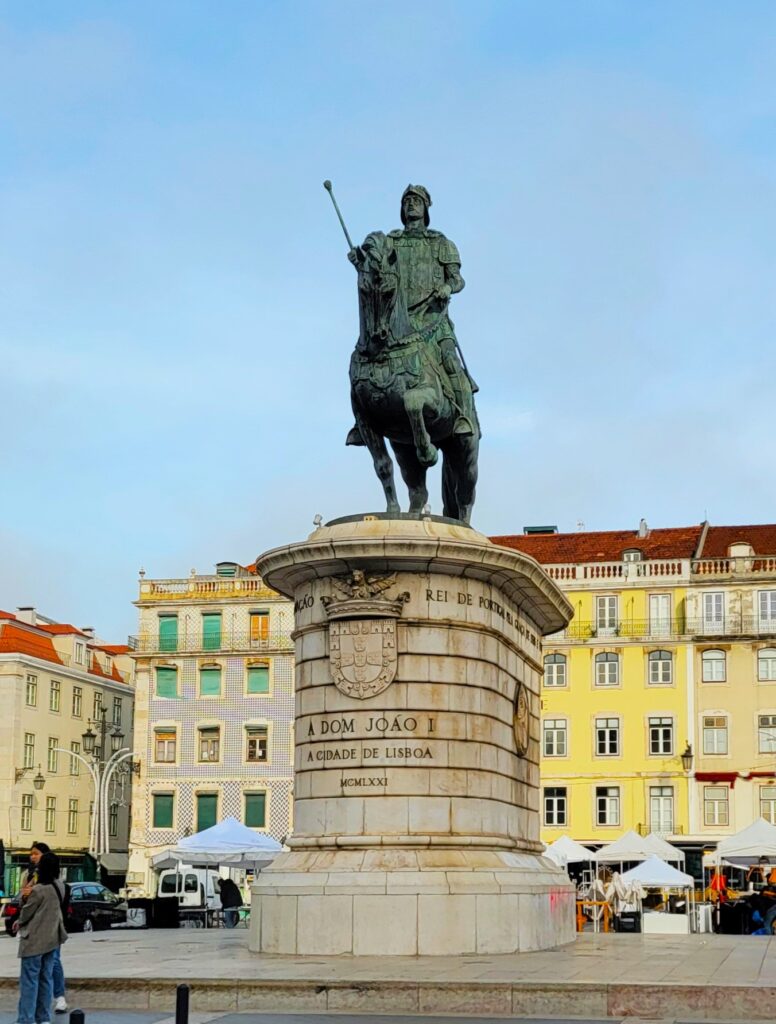
Lisbon has a reputation for hills, narrow streets, and confusing turns, but a good guide makes it feel manageable instantly. On this tour, I learned the main squares, how the streets all flow into Baixa (one of the most popular neighborhoods, and where I was staying), and how to spot landmarks that make it easier to navigate later.
And because this walking tour sticks mostly to central areas and gentle climbs (with only a couple of steeper parts), it’s very doable for most people.
You’ll See Baixa, Chiado & Alfama in One Go
These are the three core neighborhoods most visitors spend the most time in. Instead of trying to see them separately, this tour gives you a quick overview of all three:

- Baixa — the flat, elegant downtown grid
- Chiado — stylish and full of cafés, bookstores, and shops
- Alfama — the oldest, most atmospheric part of Lisbon
It’s the fastest way to create a “mental map” of Lisbon and it makes planning the rest of your trip much easier.
It’s Ideal for Solo Travelers
Walking tours are one of my favorite solo-travel activities because they give structure to the day without being exhausting. You also have a guide who’s keeping track of the group, sharing local insights, and pointing out things you wouldn’t notice on your own.
I felt comfortable the entire time. Walking with a guide in the afternoon gave me that immediate familiarity that helped me feel at ease for the rest of the trip.
You’ll Learn What’s Worth Returning To
One of the best parts of doing a walking tour early is figuring out:
- which places you want to come back to
- which streets you want to explore more deeply
- where to eat (and where not to eat)
- what areas feel most “you”
I ended up returning to Chiado that same evening, and Alfama on another day, because the tour gave me such a good first impression of both.
💞 My Recommended Lisbon Walking Tour 💞
This is the exact walking tour I took on my first day in Lisbon. It’s the perfect way to get oriented, learn the neighborhoods, and ease into the city.
The Tour I Took — What We Did (And What I Loved)
I booked this exact Lisbon walking tour. It starts in a central, easy-to-find location and covers so much more than I expected.
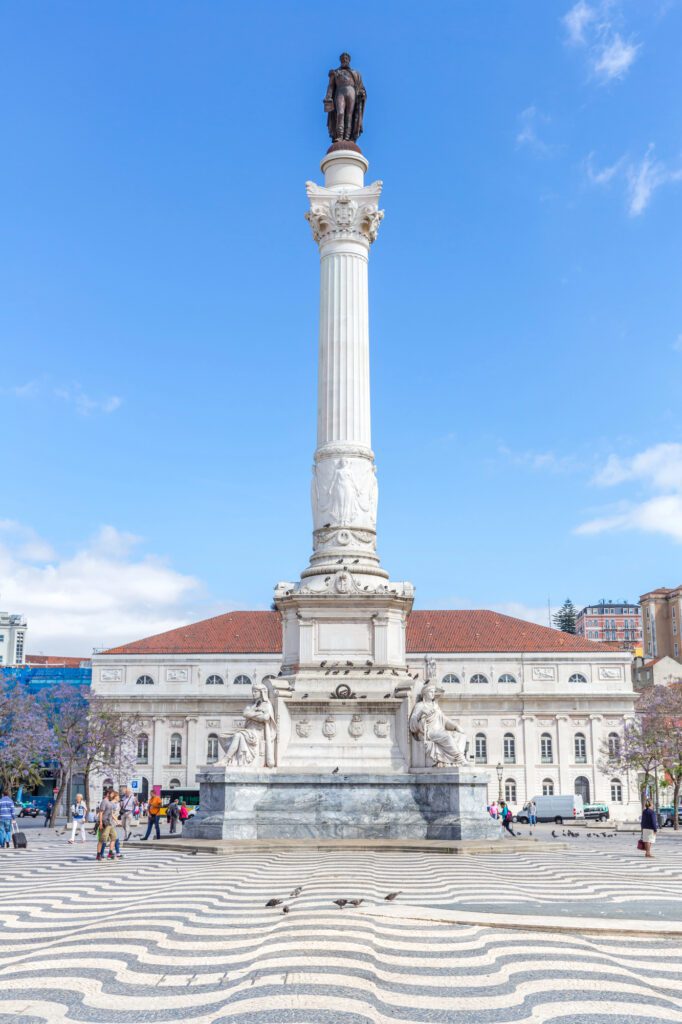
My meeting point was Praça Dom Pedro IV in Rossio Square, a 10-minute walk from my hotel in Baixa (Eurostars Lisboa Baixa). Even though it was my very first day in Lisbon, getting there was simple.
The square is lively without feeling overwhelming, and I felt totally comfortable walking there on my own at 2pm.
Here’s what we covered on the tour:
Sour Cherry Wine + Local Flavors
Our first stop was at a walk-up ginjinha stand. Our guide gave us a quick history about the famous sour cherry liqueur Lisbon is known for.
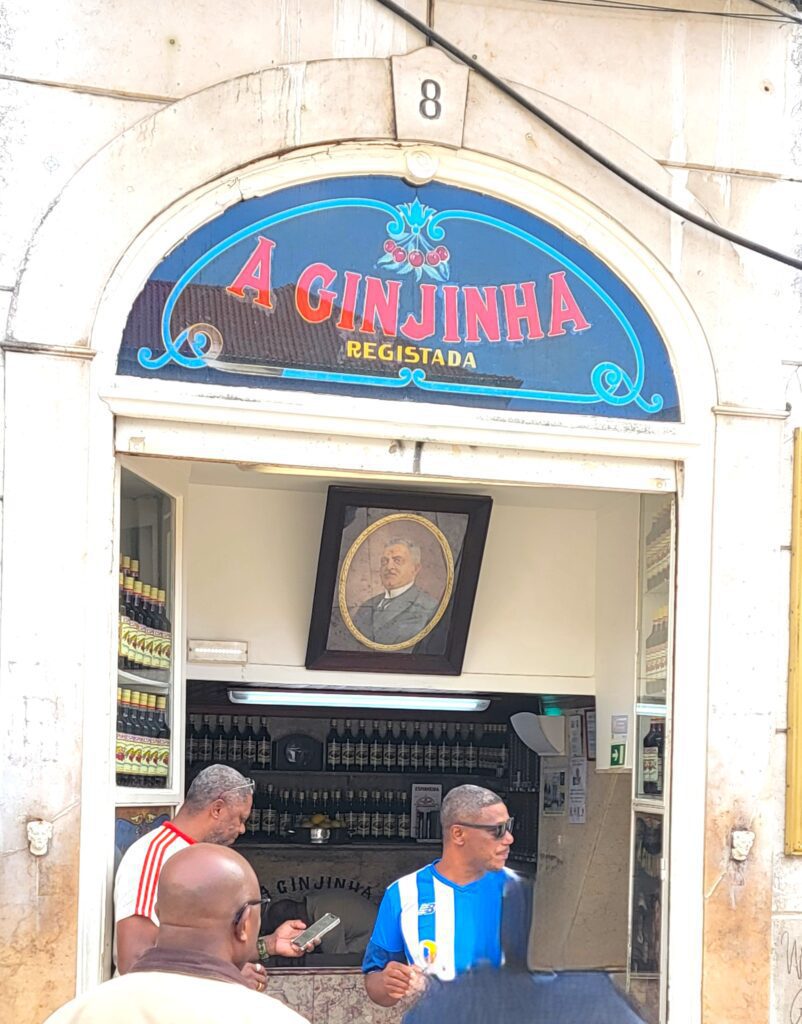
The ginjinha was not provided as part of the tour, but we were encouraged to buy some to try if we wanted to. It was such a fun way to break the ice and ease into the experience.

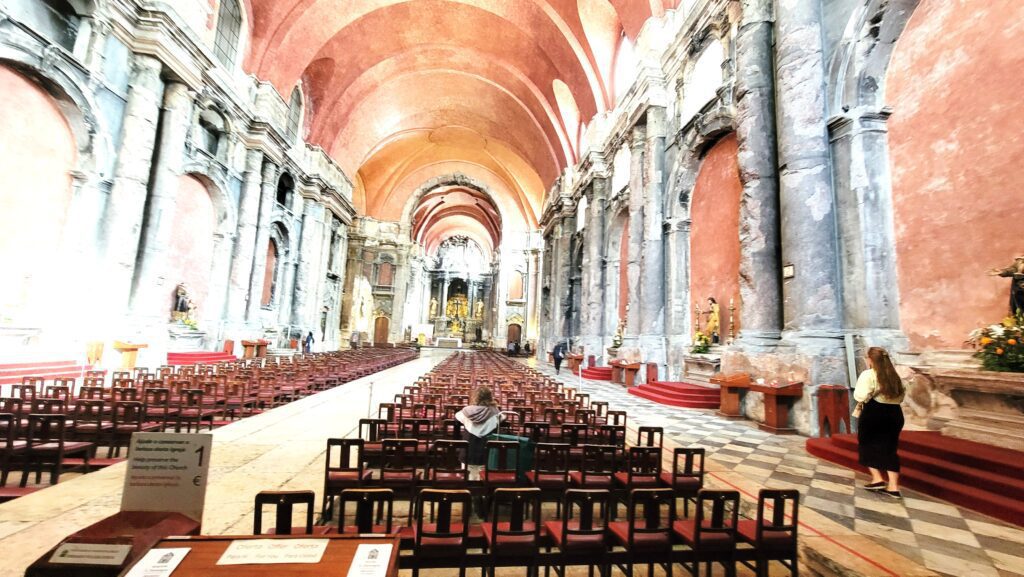
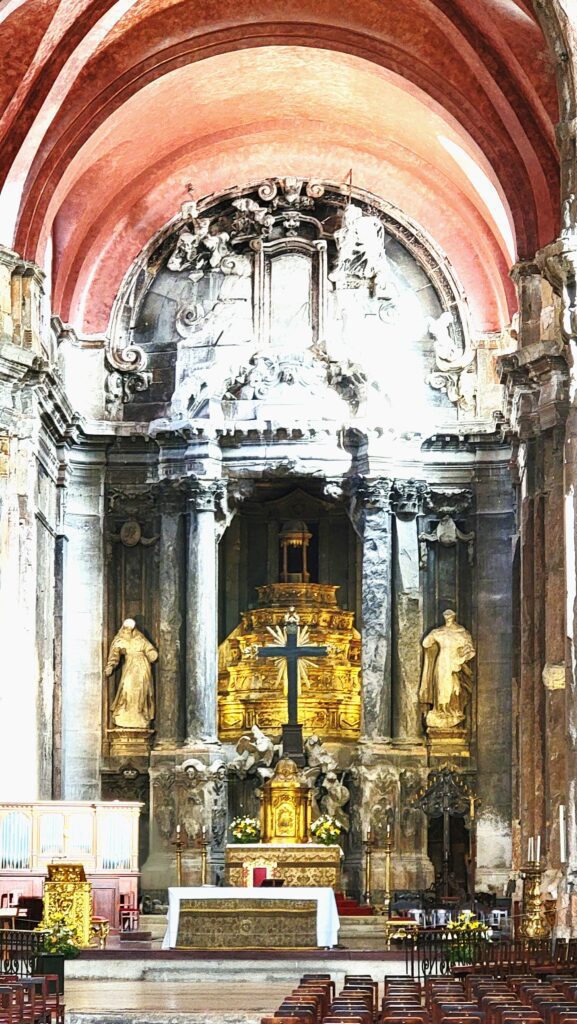
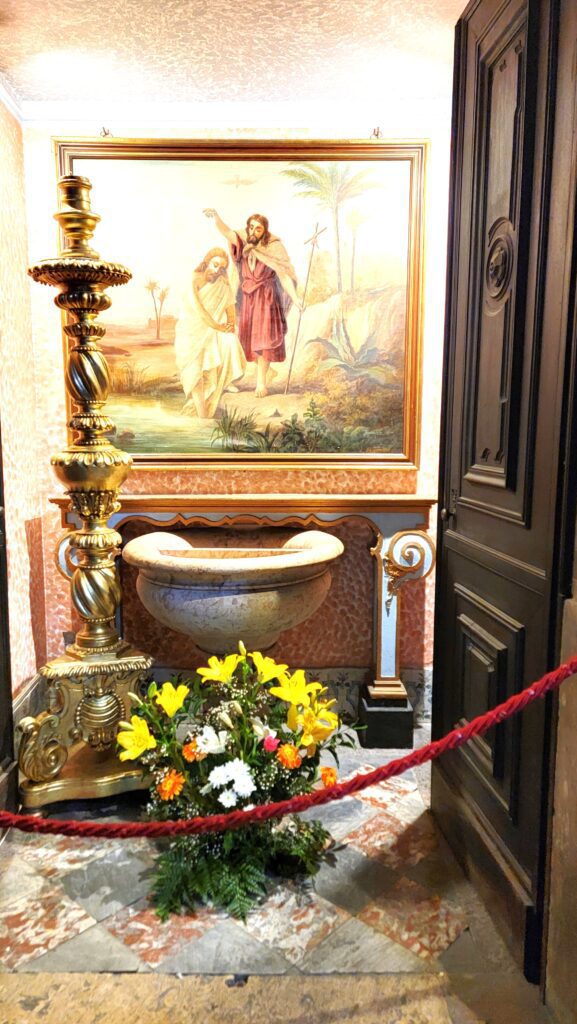
The “Cursed” Church of St. Dominic & Neo-Gothic Train Station
From there, we visited one of Lisbon’s famous churches, the Church of St. Dominic.
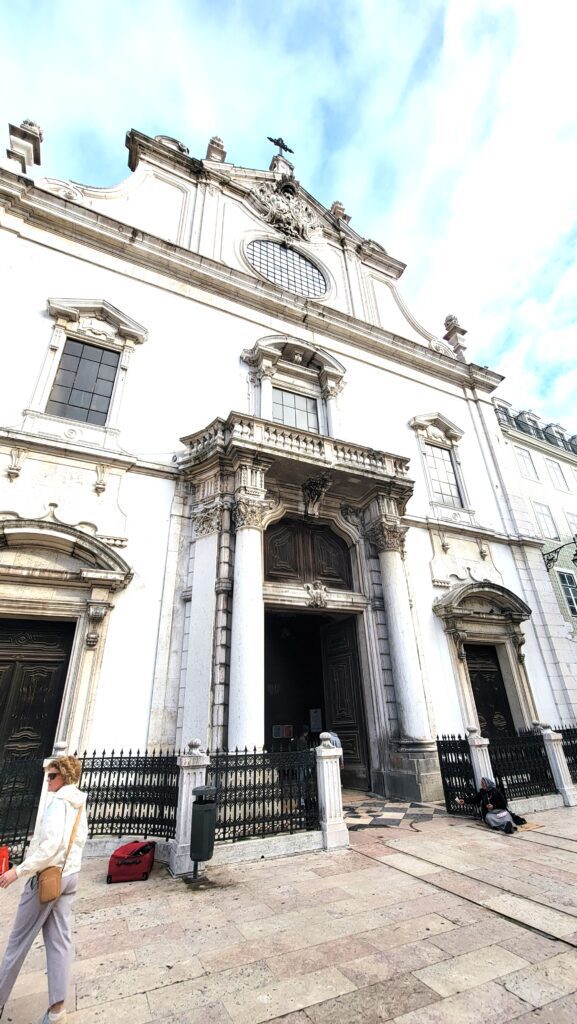
Our guide told us it was known as a “cursed church” due to a fire it endured and other parts of it’s troubled history.
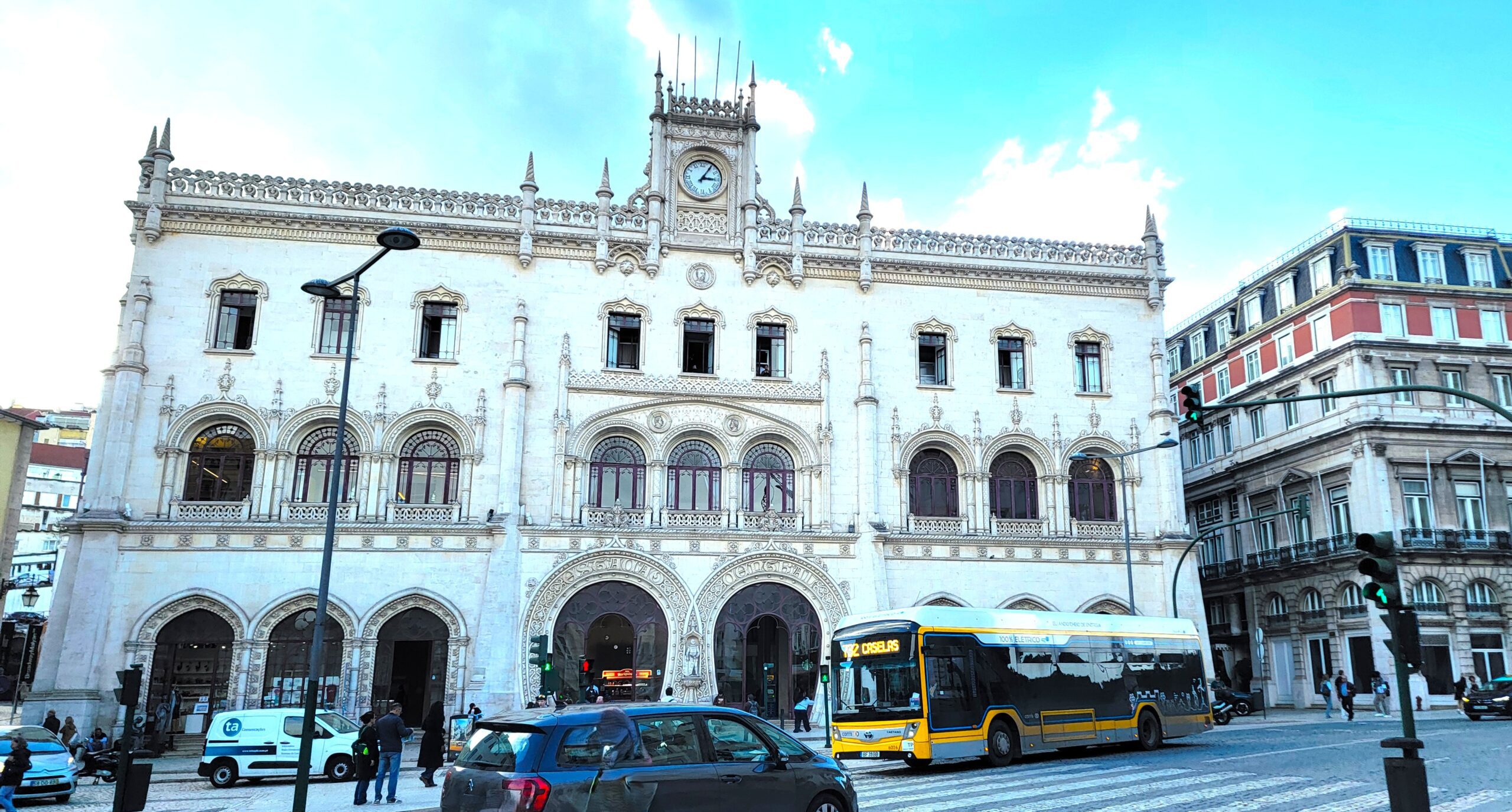
We next headed to the stunning Rossio Train Station, a gorgeous example of neo-Gothic architecture.
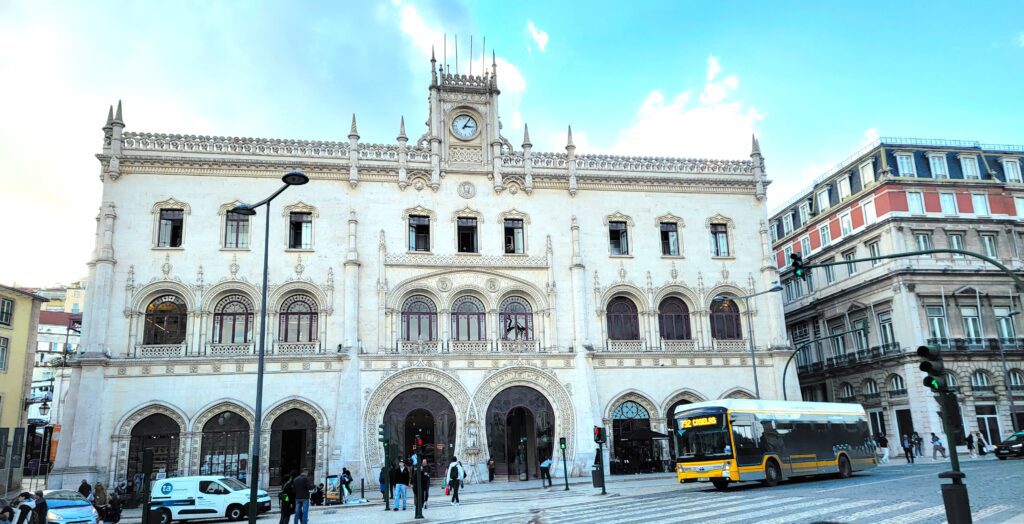
We stepped inside the station and walked through it and up the escalator toward Bairro Alto, where the guide shared stories about the area and pointed out some incredible viewpoints overlooking the city, including a perfect angle of São Jorge Castle.
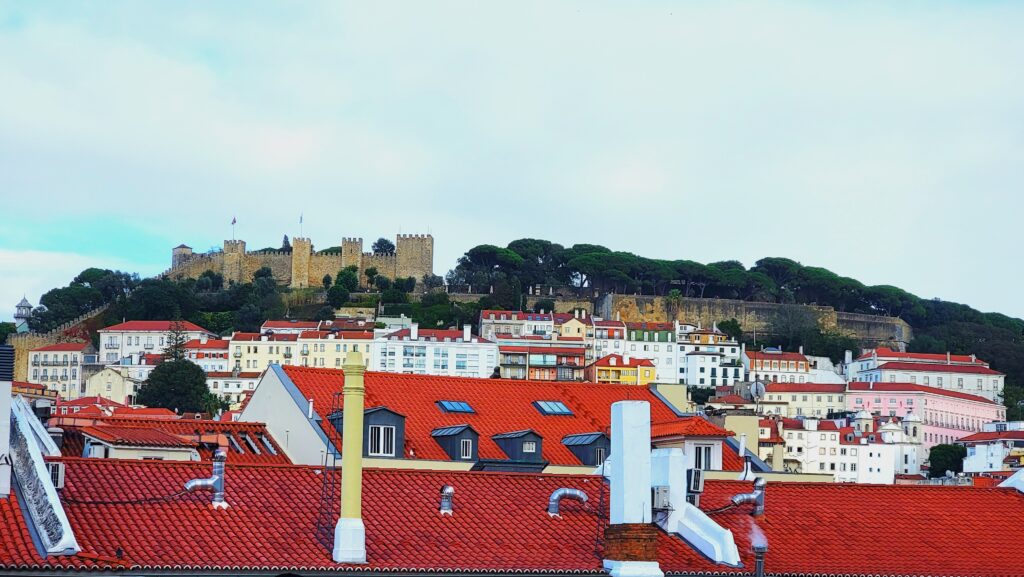
A Walk Through Bairro Alto
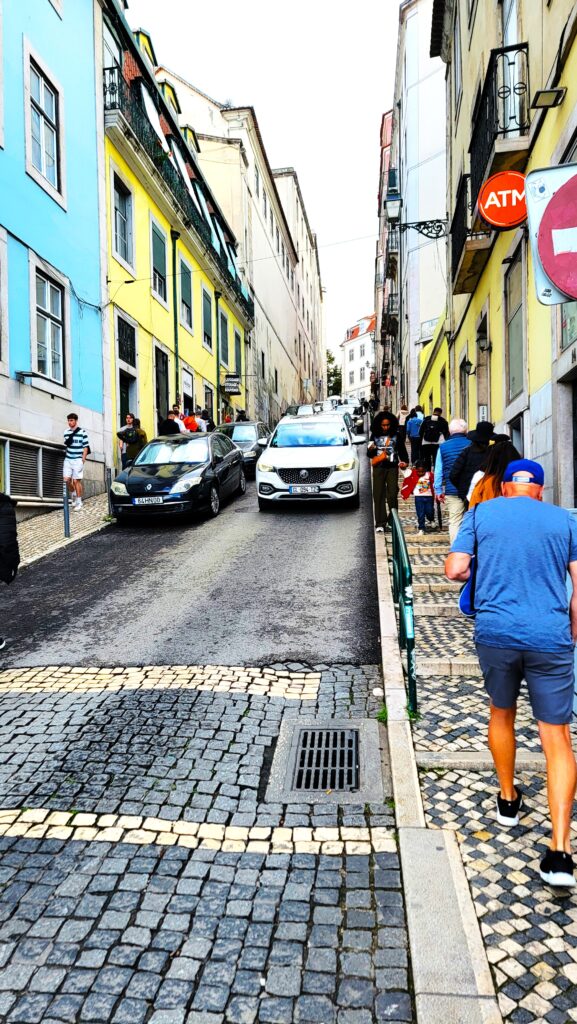
Bairro Alto is known as Lisbon’s nightlife district, but during the day you get a whole different feel for it. This part of the walk included one of only two steep hills on the tour.
At the top, we walked across another square (Largo do Carmo) and stopped at Carmo Convent (between Bairro Alto and Chiado), which was also ruined by fire and earthquake. There’s a huge crack above the door (over 600 years old) which the guide explained in a way that made the history feel alive.
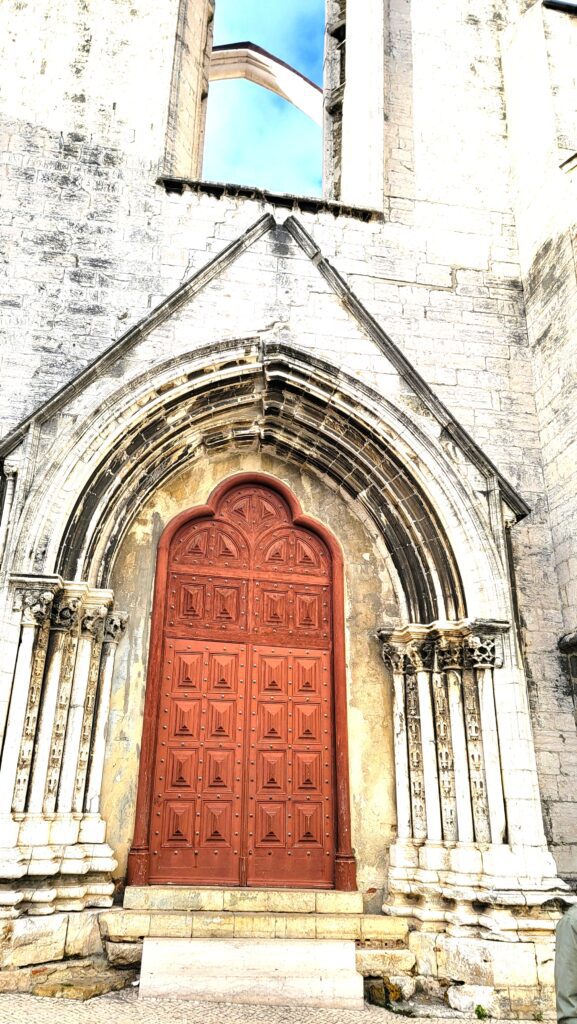
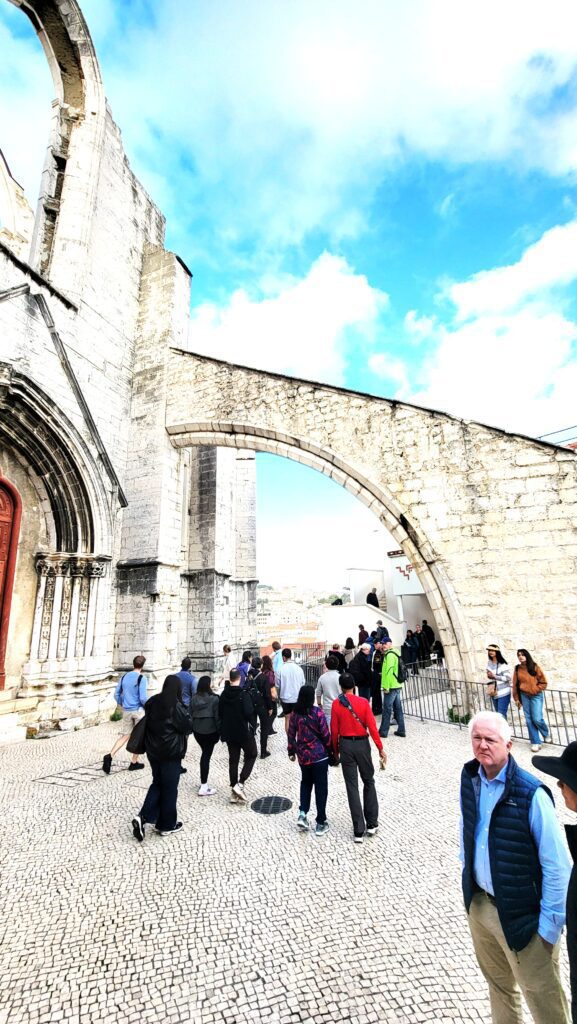
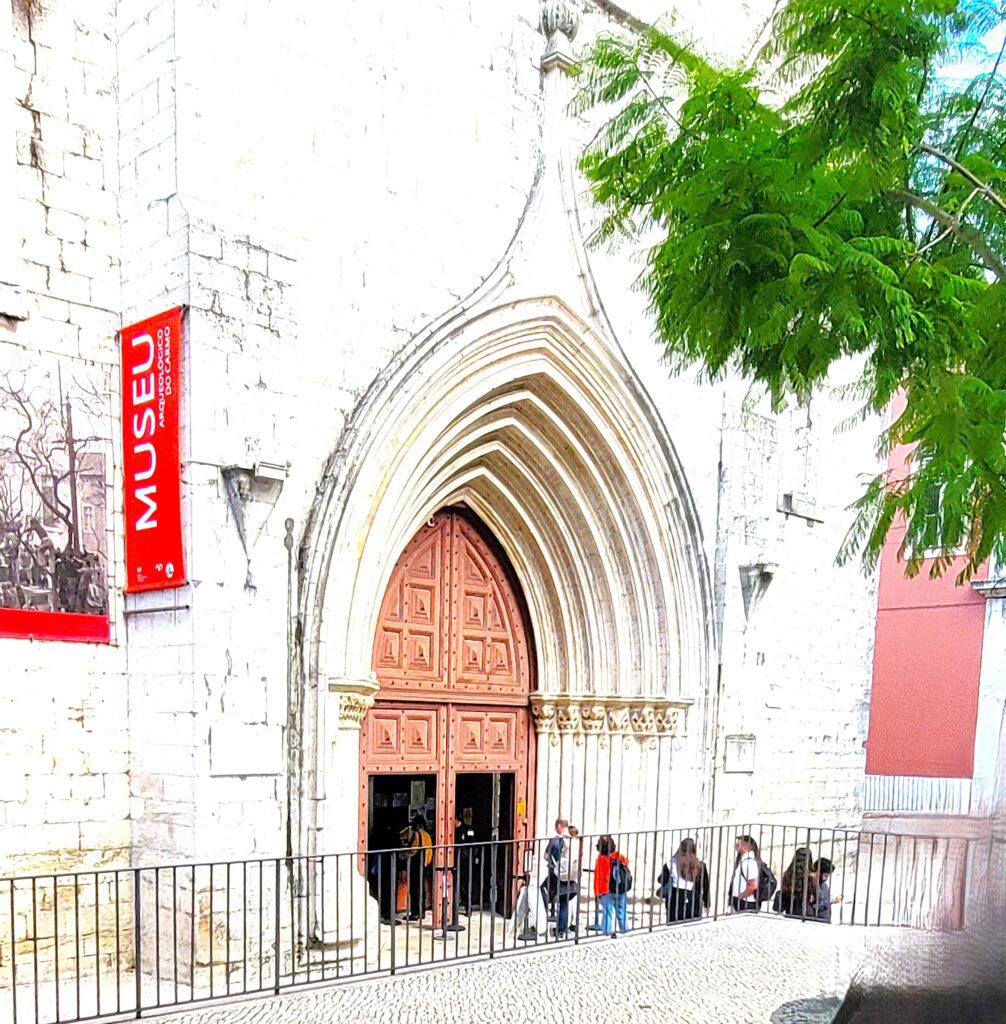
The ruined church is now an archaeological museum.
This was also the area where my guide was especially vigilant about pickpockets. She identified several in real time (she counted at least six). It didn’t feel scary. just something to be aware of. The same way you would in any major city. Keeping your bag in front of you and staying aware is more than enough.
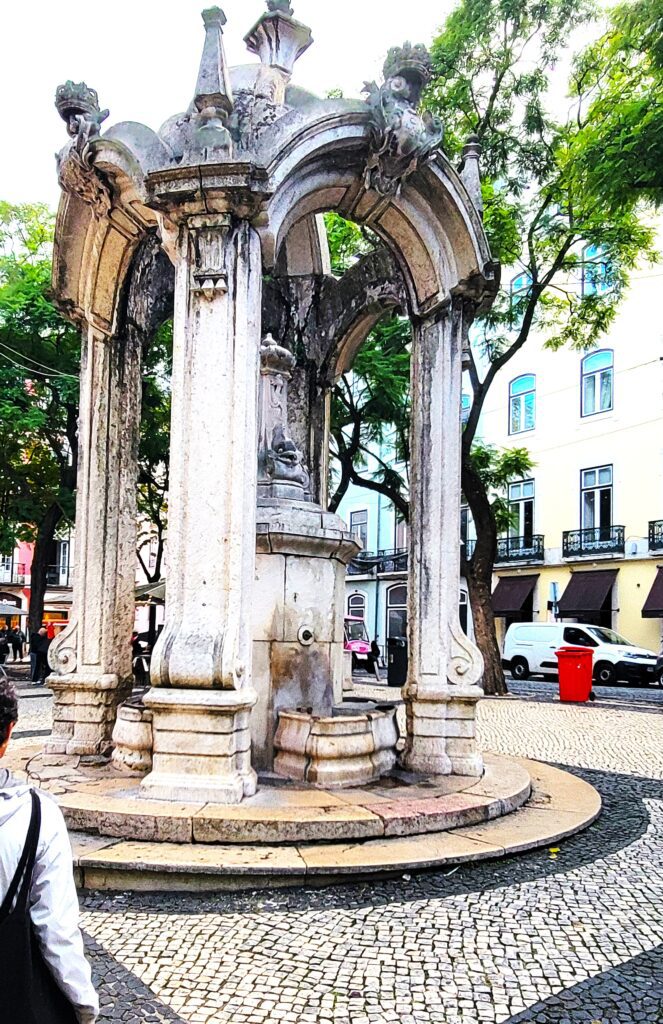
Largo do Carmo square is one of the many charming squares that help you orient yourself to Lisbon. Plus it provided some incredible views of Lisbon. (But no surprise there. Lisbon is pretty much ALL incredible views!)
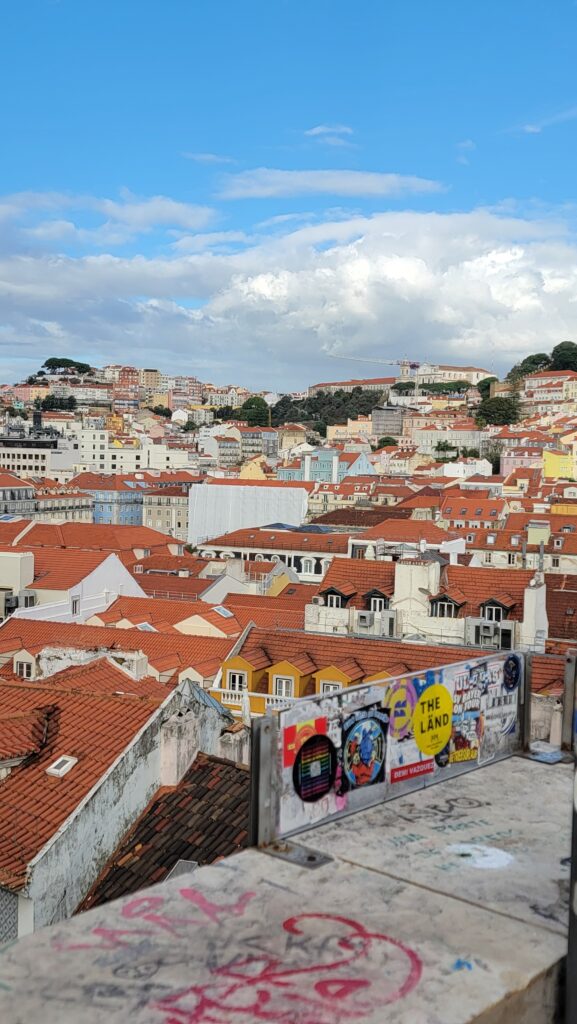
Another way to get from Baixa to Largo de Carmo is by using the Santa Justa lift. It was closed while I was in Lisbon, but hopefully you’ll have a chance to try it during your own visit!
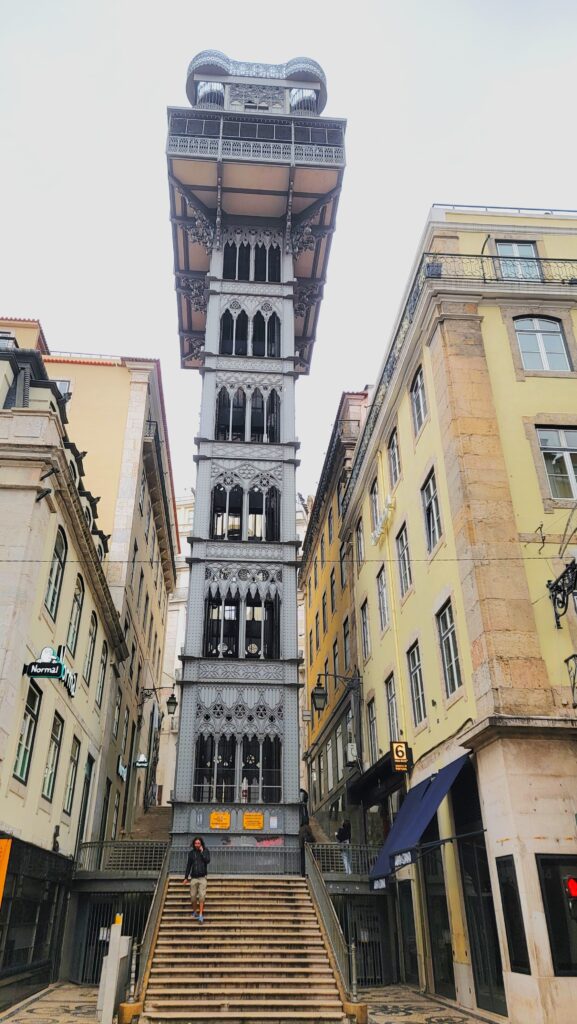
Chiado’s Shops, Bookstores & Pastel de Nata
Next, we entered Chiado, the elegant 19th-century shopping district. We rode an escalator up to the street level and passed by Bertrand Bookshop, the oldest operating bookstore in the world.
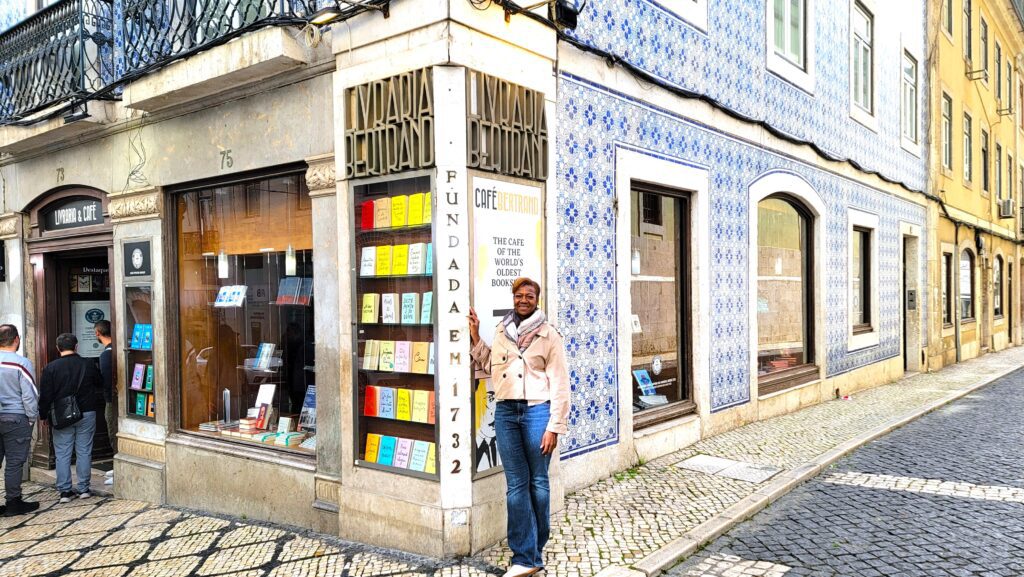
It was in Chiado that I started see all of the shopping opportunities that the city has to offer. There were so many shops on so many beautifully tiled streets. I’m not much of a shopper myself, but seeing those shops made me think of all the fun my daughter could have in Lisbon. 😂
We also stopped for a pastel de nata (my first in Lisbon…but not my last), which was a perfect little break.
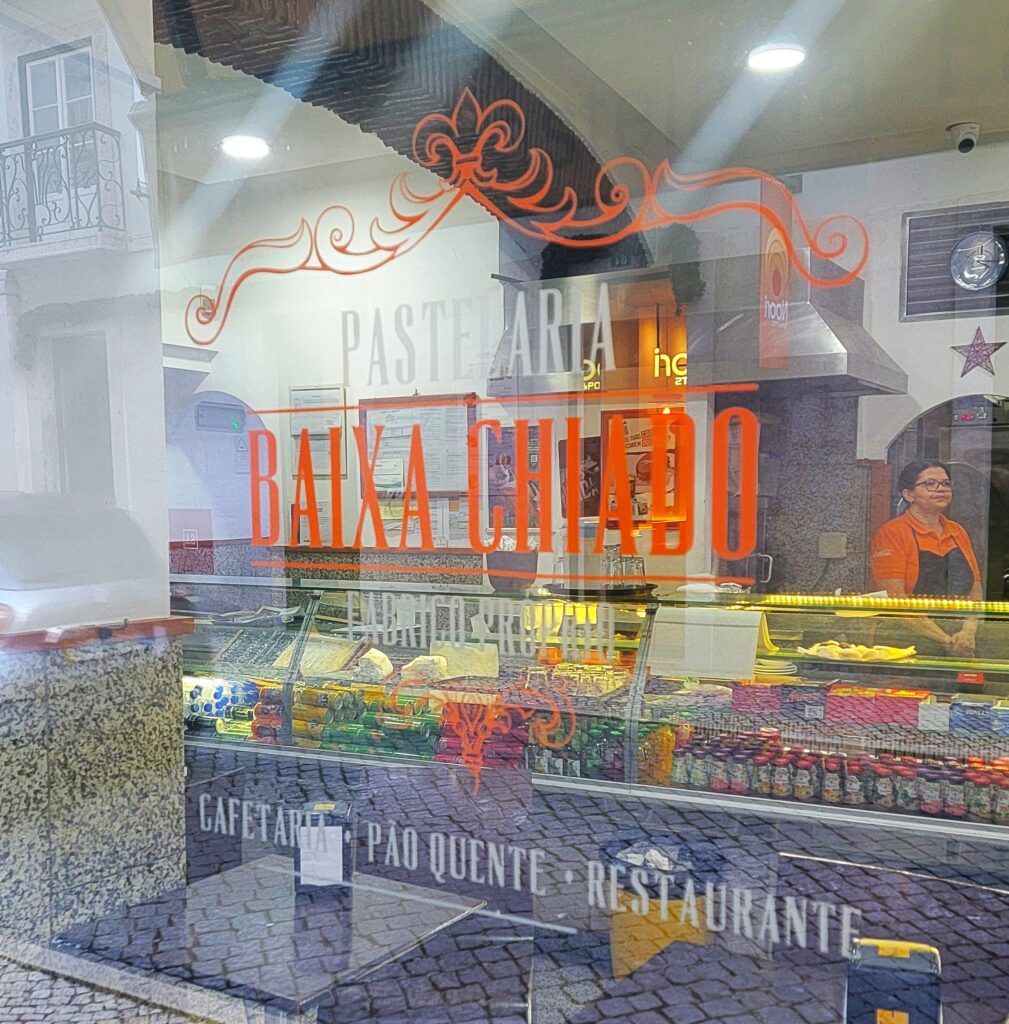

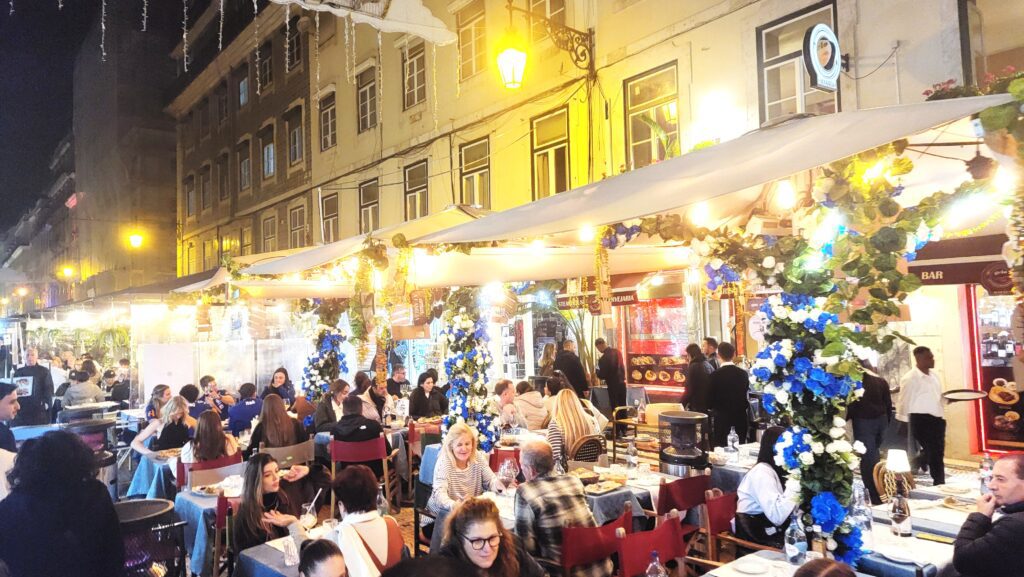
It was here, among all of the restaurants and shops that our guide gave us some great food advice here.
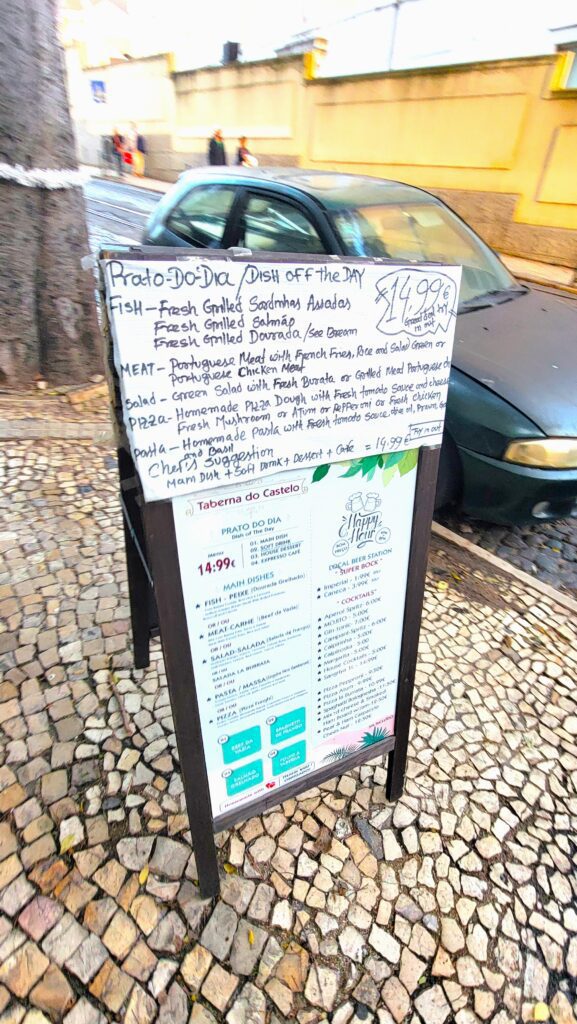
Avoid the restaurants on the big pedestrian street with people calling you in and menus full of pictures. Prices tend to be higher, and the food isn’t as good. Instead, look for smaller spots with handwritten menus just a few streets away.
Wandering Alfama’s Oldest Streets
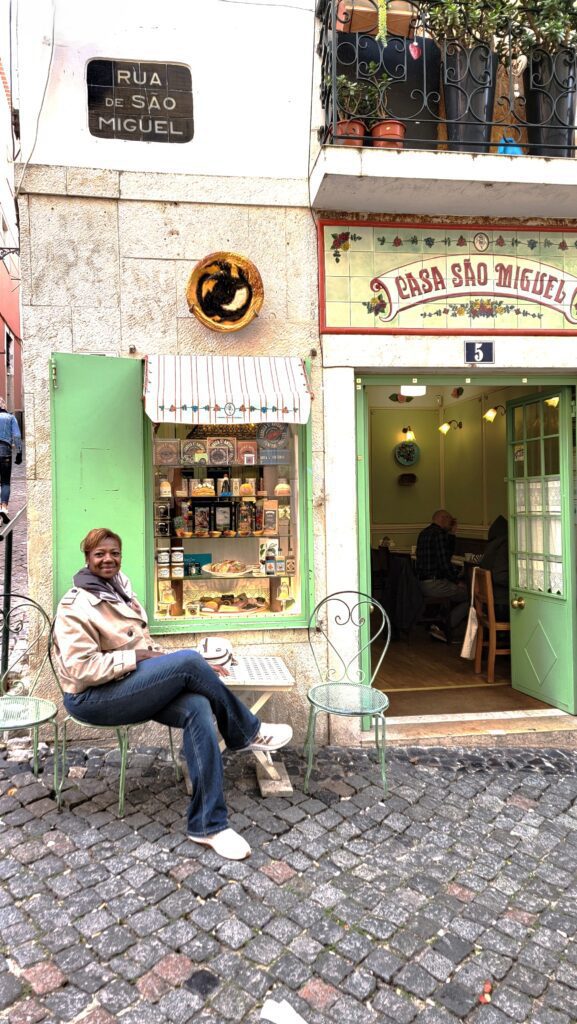
Then we entered Alfama, the oldest part of Lisbon. It’s full of narrow streets, bright sour-orange trees, and tiny alleyways, including the narrowest street in the city, Rua da Judiaria.
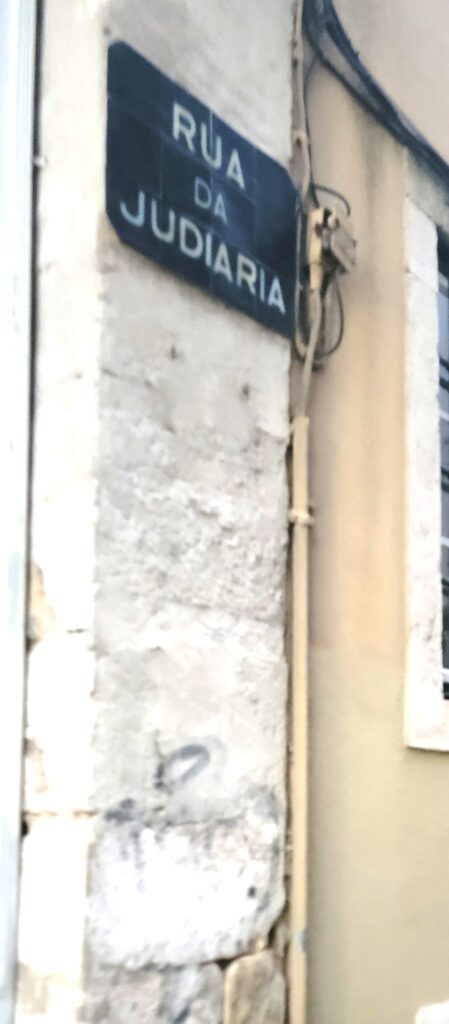
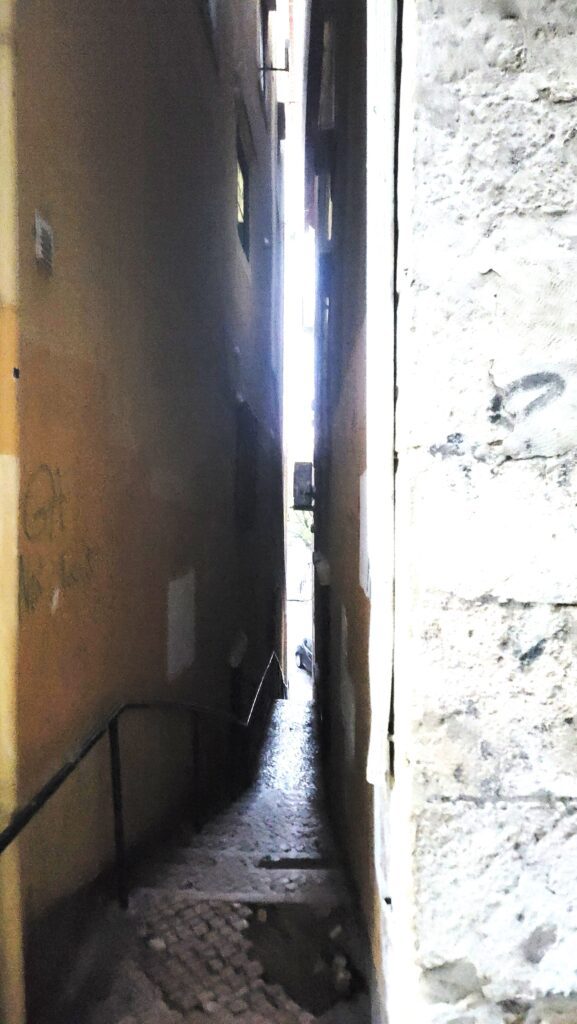
We headed toward the famous viewpoint, Miradouro St. Luzia. Along the way, we spotted some beautiful tiles that decorated so many buildings. We also saw some of the city’s famous street art.
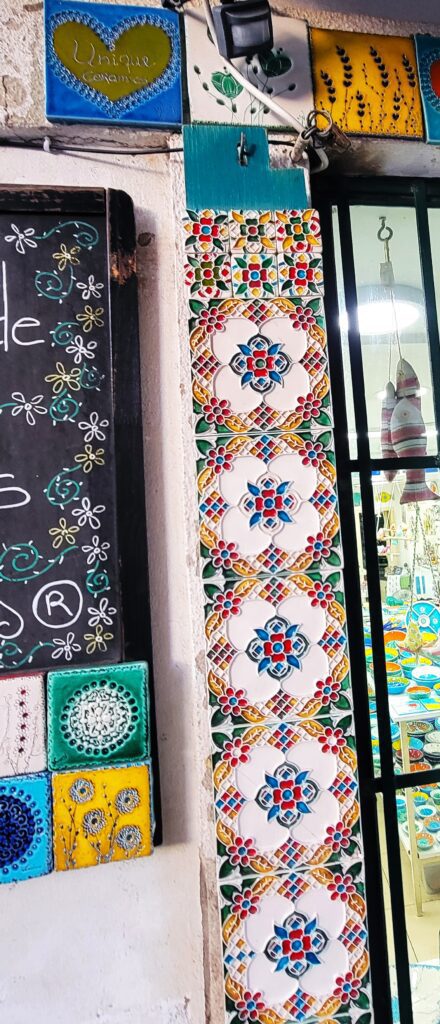
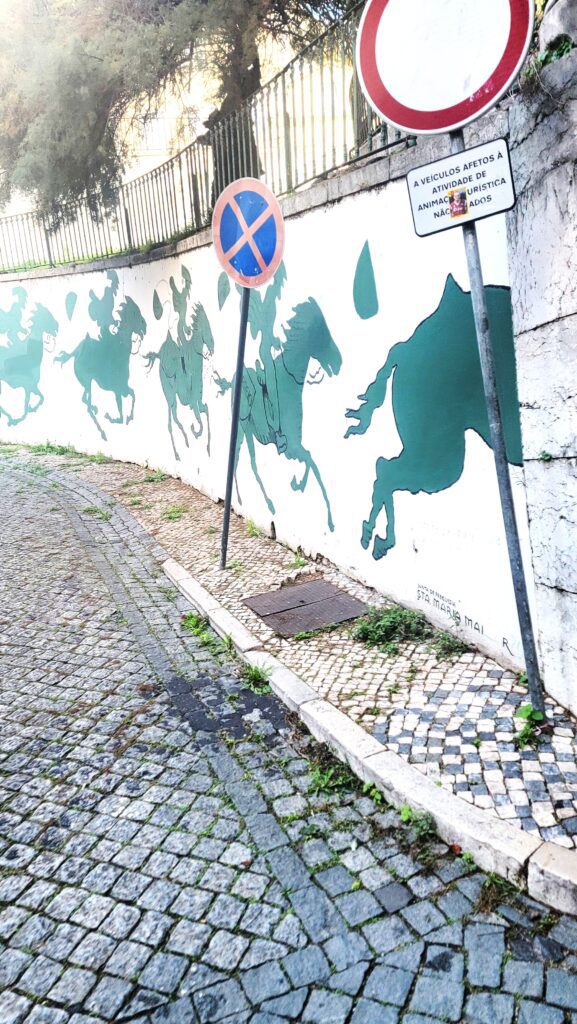
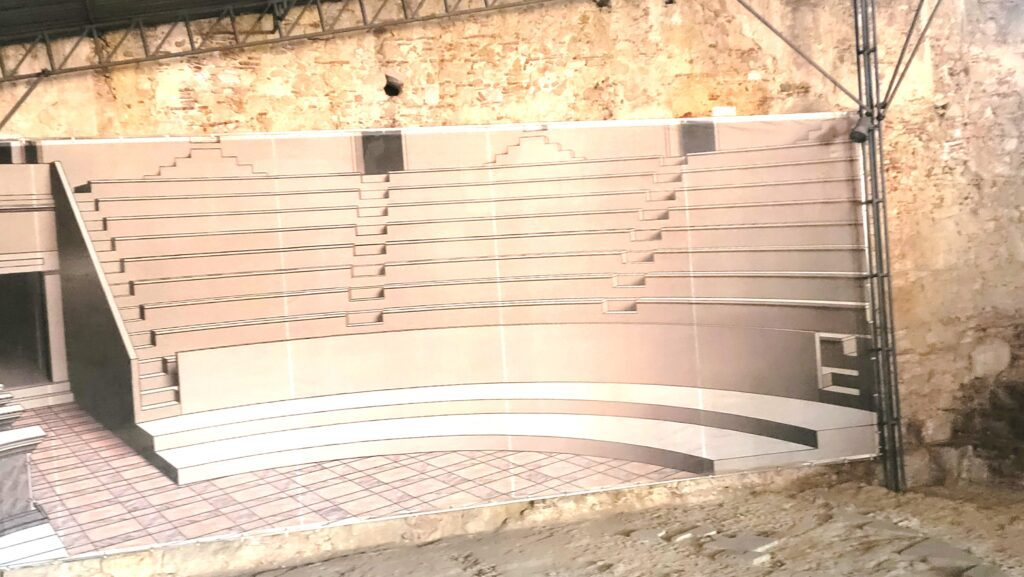
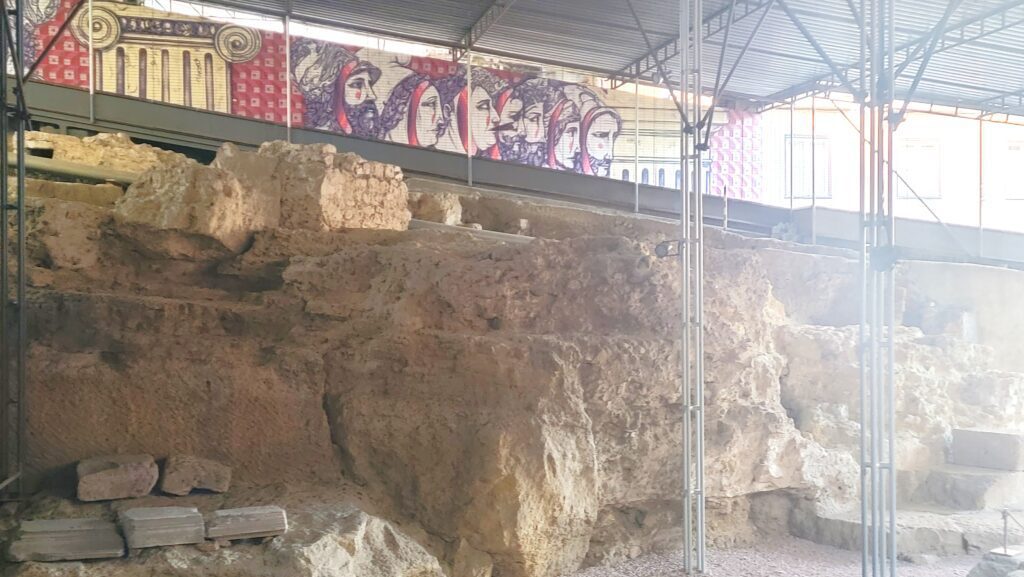
We also passed Lisbon’s Roman Theater, a small but fascinating set of ruins in Alfama that date back to Roman times. It’s not something I would’ve fully appreciated without a guide explaining its history and how it fits into Lisbon’s layered past.

After that, we climbed another (steeper) hill to Pastéis de Bacalhau, where we had a codfish cake paired with green wine.
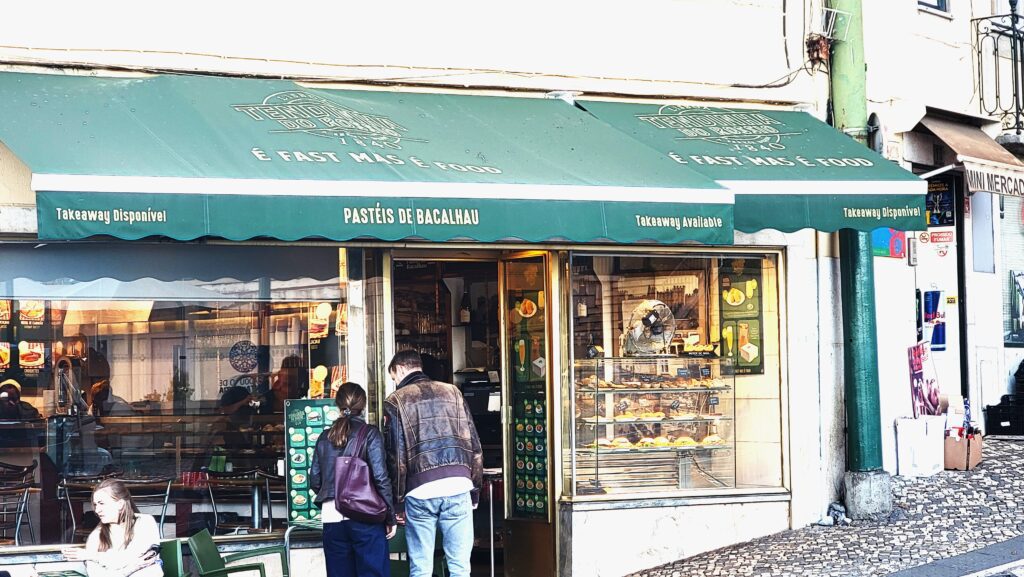
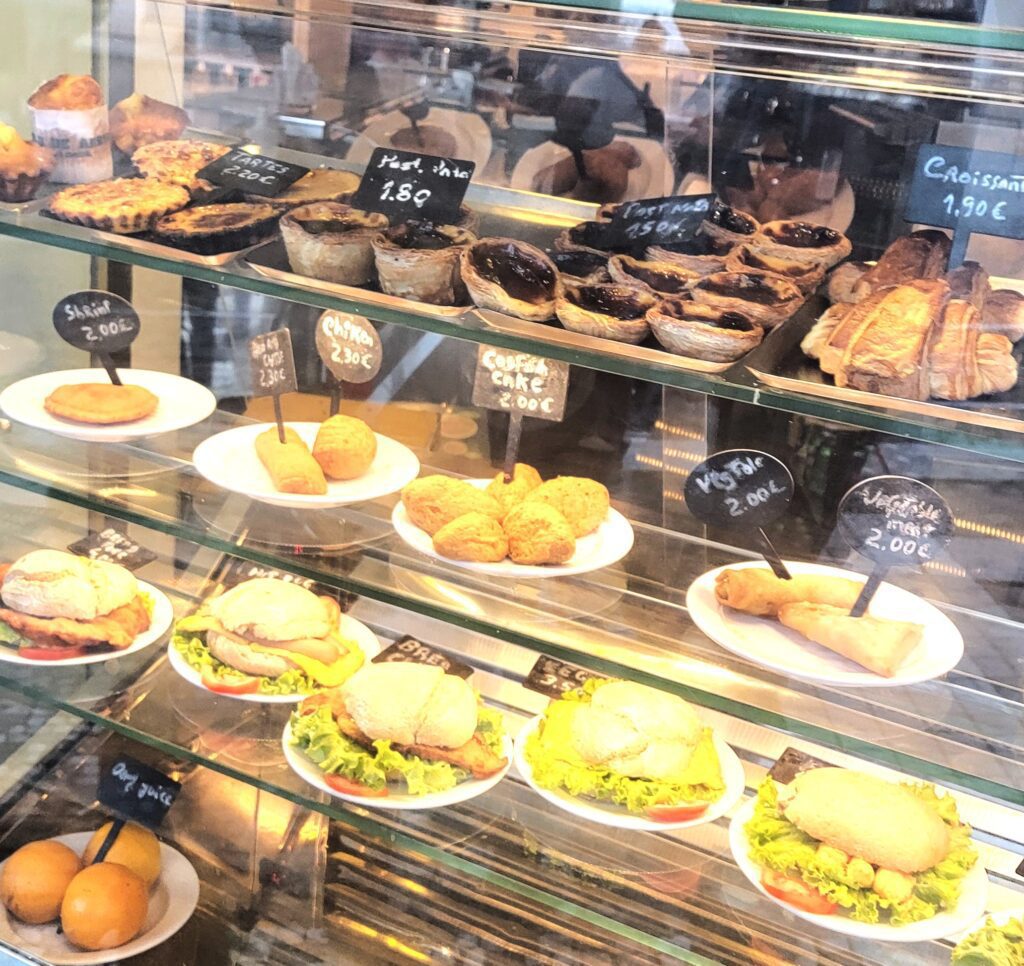
I’ll be honest—neither was my favorite. But trying local foods is part of the experience, and this was a fun moment in the tour.
With our treats in hand, we walked across the street to the Miradouro St. Luzia, to spend a little time and experience yet another stunning view.
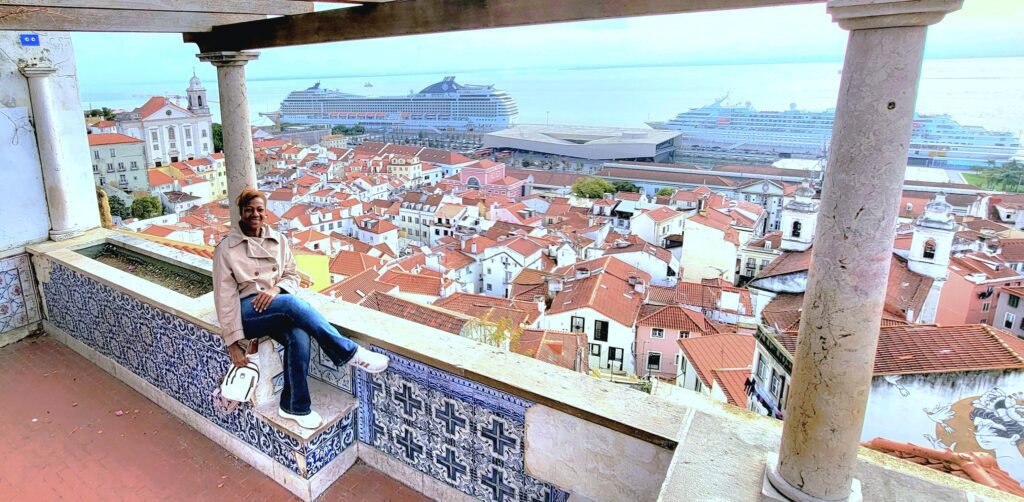
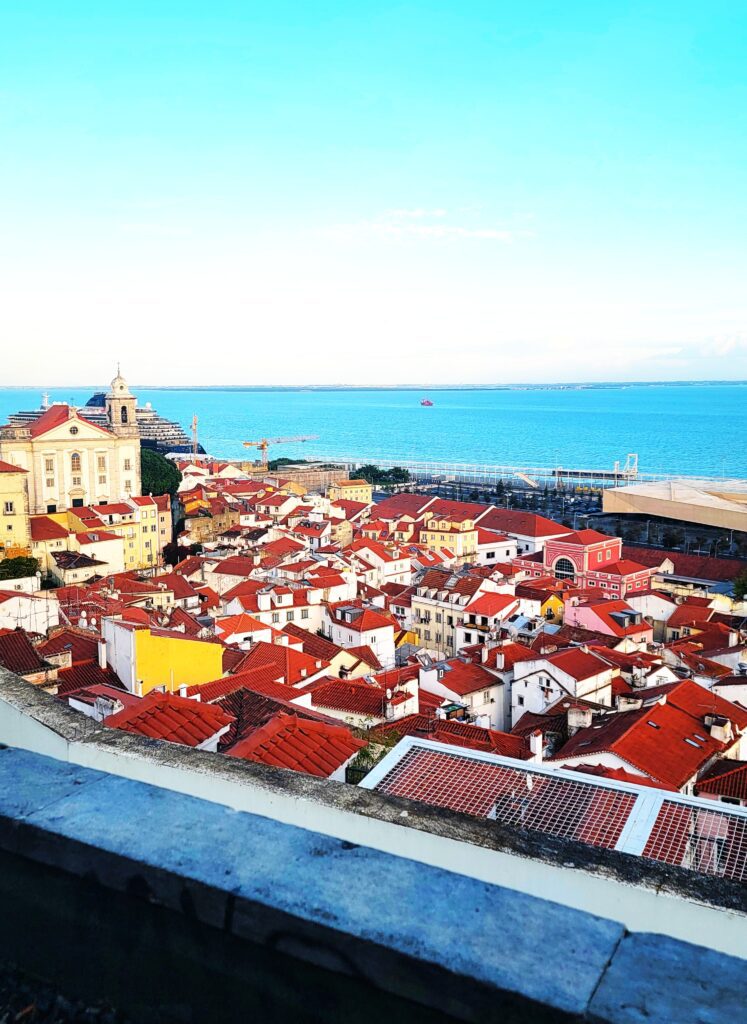
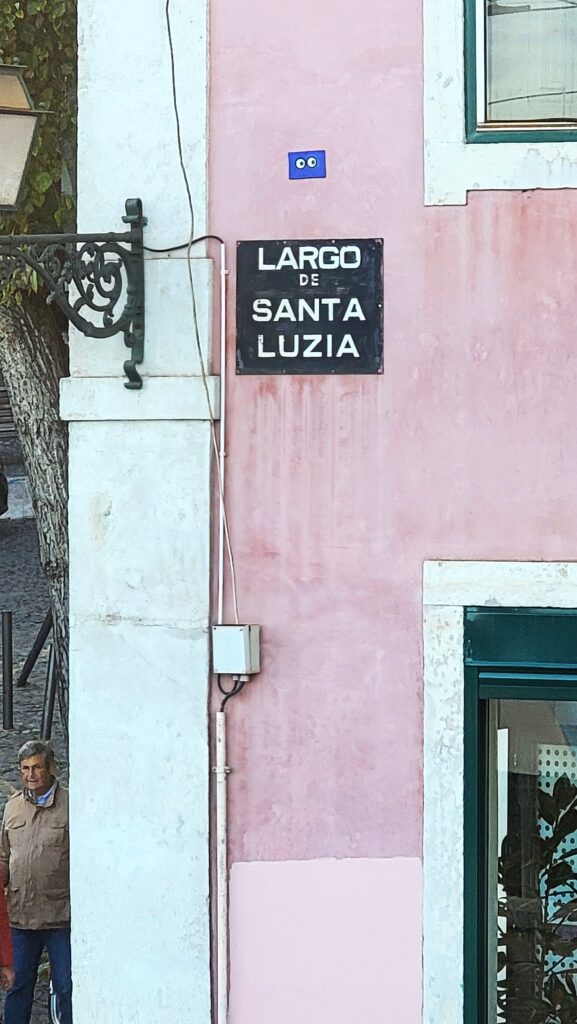
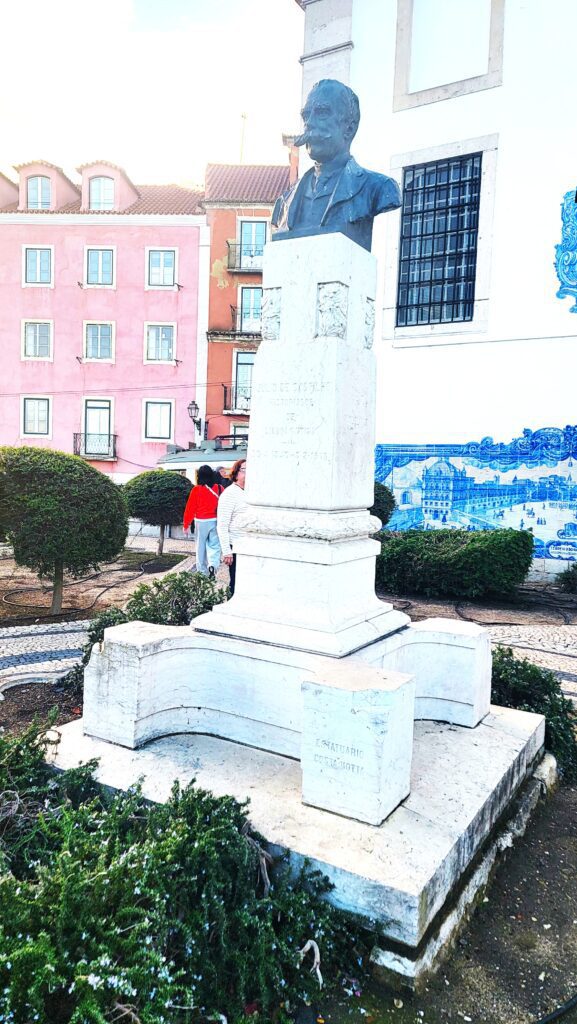
We also got to see the History of Lisbon Mural, and our guide explained some of the panels.
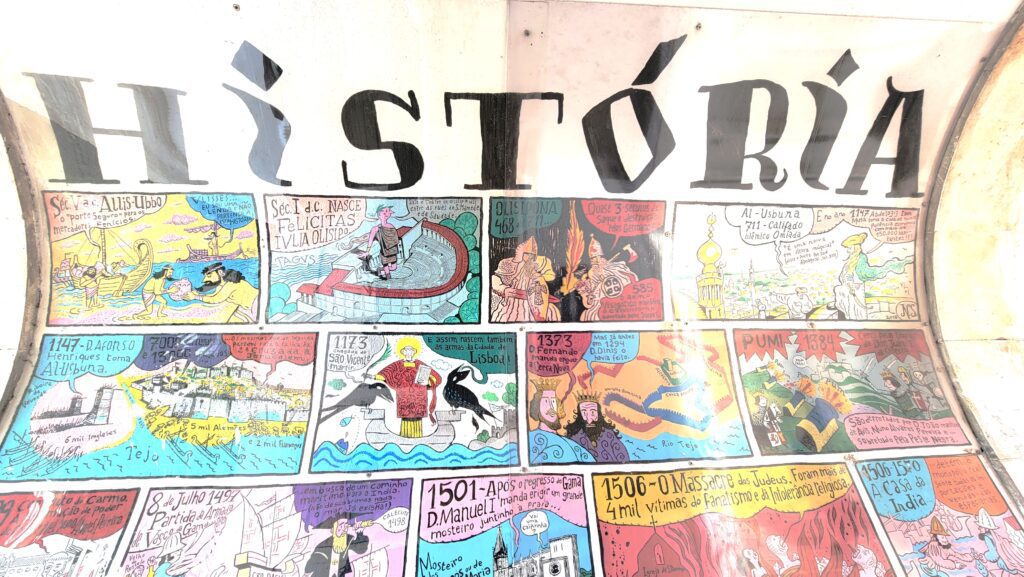
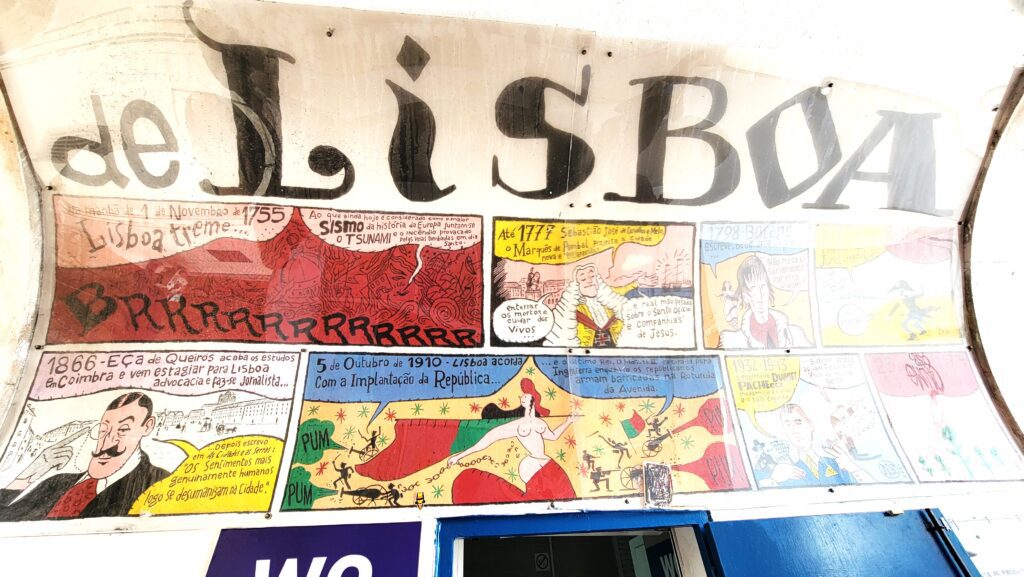
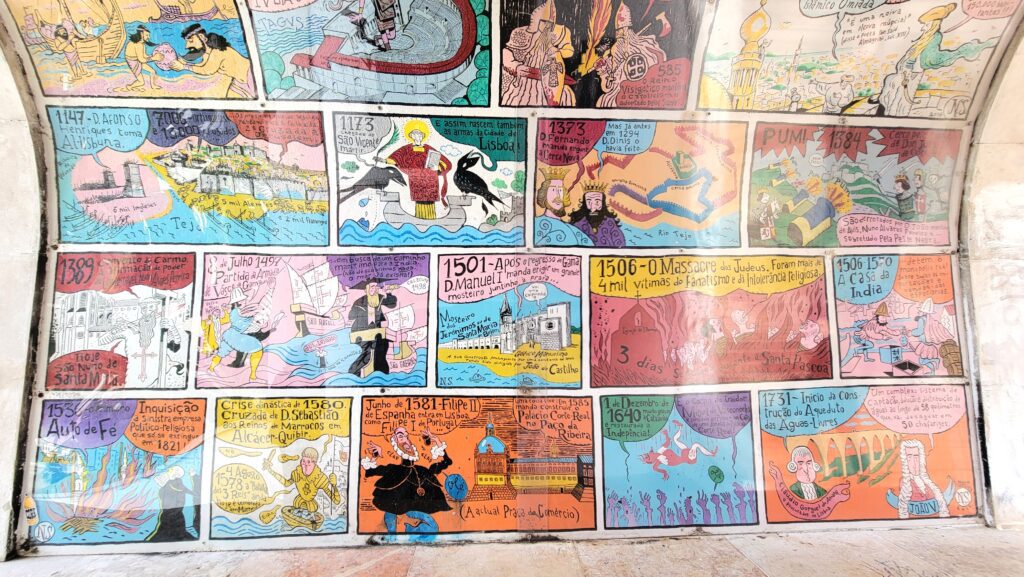
This was also where our guide explained that many people in Alfama don’t speak English, which I kept in mind for later in my trip.
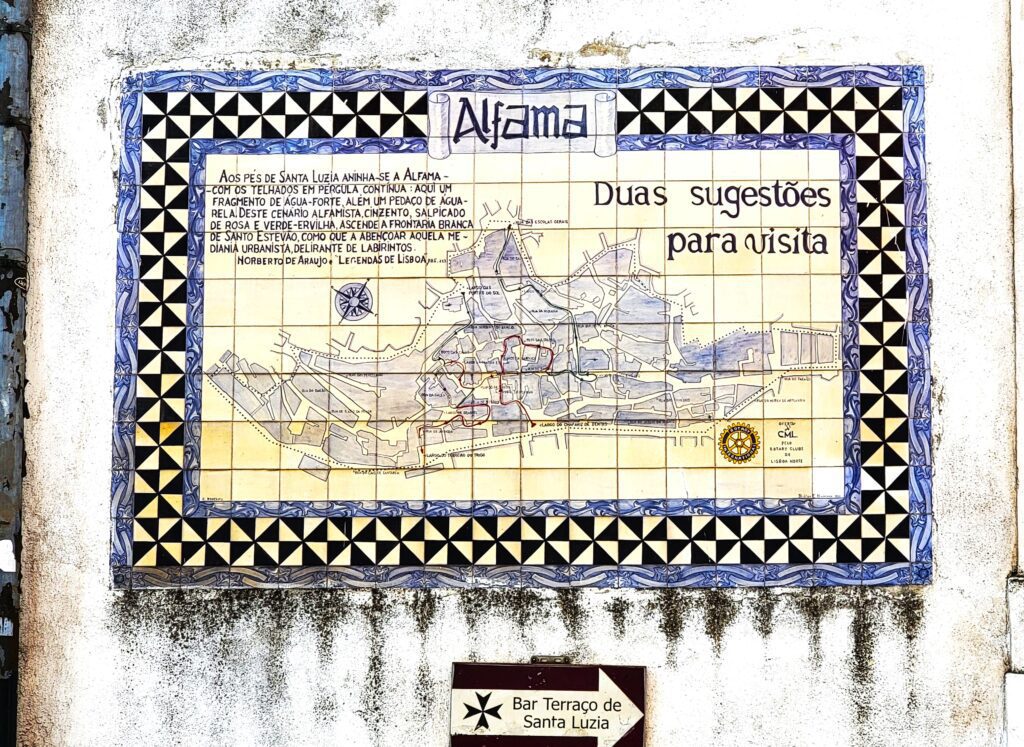
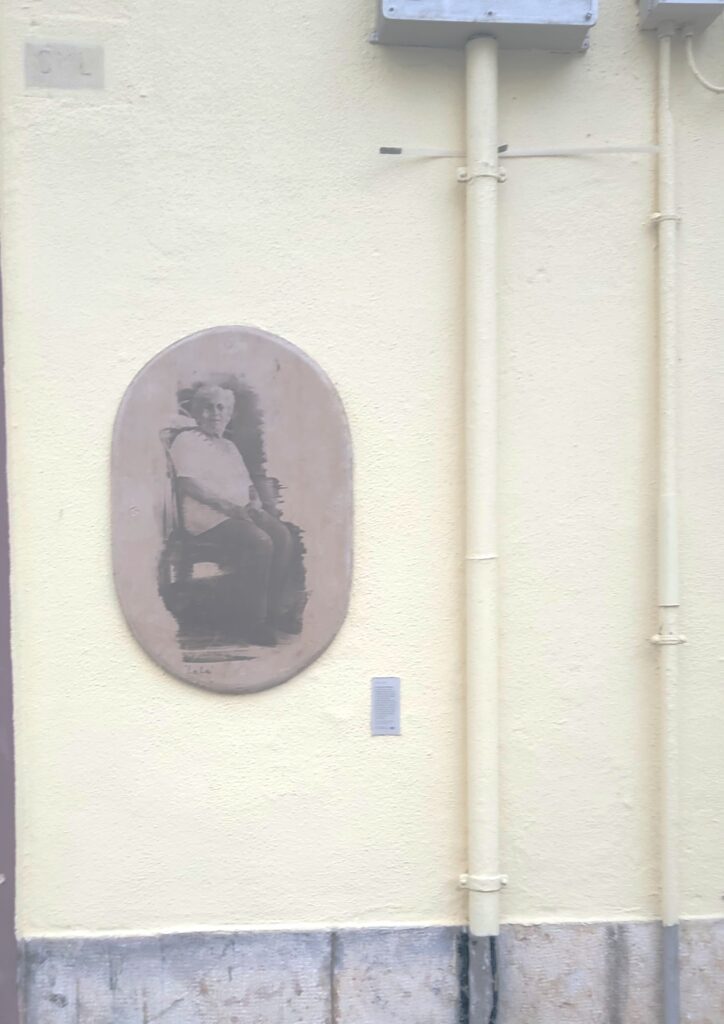
Alfama is a very old neighborhood. Many of the people who live there have had families who have lived in the exact same houses for generations. It was so cool to see some of the older generation being honored by plaques on family homes.
A Golden Hour Walk to the “Golden Gate”
We ended the tour by walking to the waterfront to see sunset over Lisbon’s own “Golden Gate” the 25 de Abril Bridge. It’s an incredible view at the end of the day.

Ending at Commerce Square
The tour wrapped up at Praça do Comércio (Commerce Square), one of the most beautiful squares in the city.
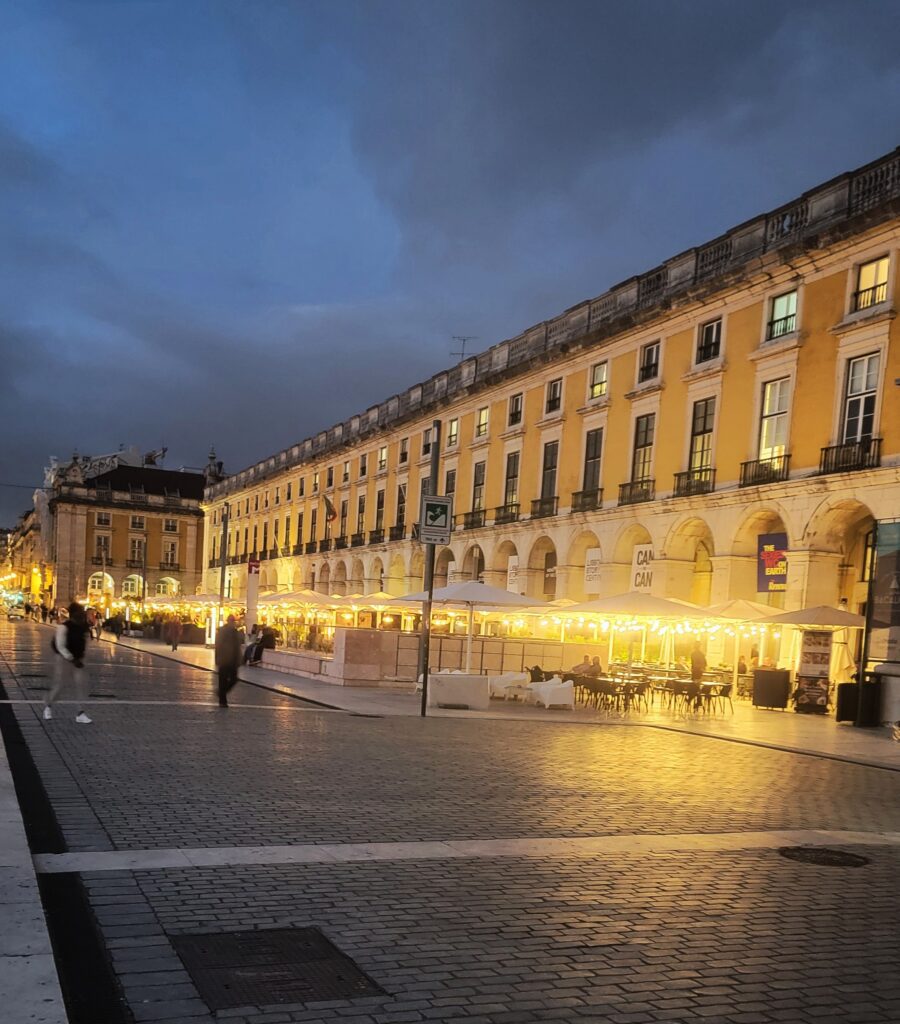
From there, it was a quick 10-minute walk straight back to my hotel.
💞 Start Your Trip With Confidence 💞
If you want an easy, fun way to understand Lisbon on your first day, this is the walking tour I recommend. It covers Baixa, Chiado, and Alfama in one go.
What You Get Out of This Tour (Especially on Day 1)
Doing this Lisbon walking tour on my first day set the tone for the rest of my trip. It helped me understand the city so much faster than if I had tried to wander around on my own, and it made every activity that followed (food tours, viewpoints, Fado, and exploring different neighborhoods) feel easier and more intuitive.
Here’s what you really gain from starting your trip this way:
A Fast, Easy Orientation to the City
Lisbon can feel confusing at first. It’s beautiful, but it has winding streets, layered neighborhoods, and hills that can surprise you if you’re not prepared. This tour ties the main areas together in a way that actually sticks, so you aren’t piecing things together later.
Once I had walked Baixa, Chiado, and Alfama with a guide, the city instantly made more sense. I knew which areas felt busy, where the hills were, which streets I recognized, and where I wanted to return the next day.
Confidence Navigating Lisbon on Your Own
Even if you’re usually comfortable exploring cities solo, Lisbon is one where a little guidance at the beginning really helps. I loved being able to wake up the next morning already recognizing streets, viewpoints, and landmarks I had seen the day before.
It removed that “first day fog” you sometimes get in a new place. And for solo travelers, that’s a huge comfort.
If safety is on your mind, you can also check out my post on Is Lisbon Safe?
A Feel for Lisbon’s Culture, History, and Neighborhood Personalities
As I mentioned, each Lisbon neighborhood has its own identity, and this tour does a great job of highlighting that. Which helped me decide where to spend more time, where to plan meals, shopping time, and slow wandering.
You can dive deeper in these posts:
The Perfect “Anchor Activity” to Build Your Trip Around
If you’re building a short Lisbon itinerary (2–4 days), doing this walking tour first gives structure to everything else.
It’s the anchor that makes the rest of your plans easier. Afterward, you’ll know:
- where to eat
- how to get around
- which neighborhoods feel most like “you”
- which places you want to spend more time in
- where you might want to return for sunset or dinner
This is why I recommend it so strongly for Day 1.
If you’re still planning your days, these guides can help:
You’ll See a Lot Without Feeling Rushed
This tour covers a surprising amount, but it never felt frantic to me. The pacing was steady, with enough stops to catch your breath, grab a snack, or take in a view.
I wouldn’t call it “relaxing,” but it was absolutely manageable. Even with the hills. And since there were only two truly steep sections, it didn’t drain my energy for the rest of the evening.
💞 Want to Explore These Same Stops? 💞
From hidden viewpoints to sour cherry wine and Alfama’s oldest streets, this tour takes you through all the spots I loved on my first day in Lisbon.
What to Know Before You Go
A walking tour is one of the easiest ways to get comfortable with Lisbon right away, but there are a few things to know so you feel prepared and enjoy the experience even more. None of these are deal-breakers. They’re just the little things that make your first day smoother.
Lisbon Is Walkable-ish….
You’ll be walking on cobblestones, up and down hills, and through older neighborhoods with uneven pathways. Lisbon’s beauty comes with texture. Good sneakers made a huge difference for me, and I was glad I didn’t try to do this in anything less supportive.
If you want more details about the terrain, you can check out my post on
Walkability & Accessibility in Lisbon.
This tour is mostly flat or gently sloping, but there are two spots that are noticeably steep. They’re short, and the guide takes breaks as needed. If you want a tour that lets you warm up to Lisbon’s hills without diving in too deep, this is a great pick.
Be Aware of Pickpockets in Crowded Areas
Like any major European city, Lisbon has pickpockets. Especially in Alfama, busy squares, and anywhere with tourists. On my tour, our guide actually identified a few in real time, which was eye-opening but also incredibly helpful.

You don’t need to be scared, just aware:
- Keep your bag zipped and in front of you
- Don’t keep your phone or wallet in your back pocket
- Stay alert in crowds
What’s Included in the Tour (and What’s Not)
The tour includes a knowledgeable local guide, and mini food tastings of pasteis de nata and a codfish cake. Plus a tasting of green wine. What’s not included:
- Tips (our guide definitely deserved a tip)
- Bottled water (so definitely bring your own!)
- Entrance to museums (the one we would have gone into was closed)
You won’t need tickets or complicated logistics—just show up at the meeting point.

Note: If you want food to be an even bigger part of your trip, I also did a great food tour (THIS ONE), where you get exposure to many different local favorites in the city.
Best Time of Day to Book the Tour
I booked the afternoon tour and loved it. The lighting was beautiful, the city felt lively but not chaotic, and by the time we reached the riverfront, the sun was starting to set over the bridge.
But the morning option is also great if you want:
- cooler temperatures
- less crowds
- an open afternoon to do other stuff
Both options work. It really depends on your energy after arriving in the city.
What to Bring With You
A few things will make the tour much more comfortable:
- Good sneakers (cobblestones + hills = non-negotiable)
- A light jacket or layer (Lisbon breezes surprise people)
- Water
- A small crossbody bag you can keep in front of you
- Your phone for photos & translations
- A portable phone battery (a fully charged one! If your taking a lot of photos and videos, then your phone battery will die quickly. Like mine did!)
💞 Ready to Make Your First Day Easy? 💞
This tour is relaxed, manageable, and perfect for navigating Lisbon’s hills and cobblestones with a guide who keeps everyone safe and together.
If you’re just starting to plan your trip, you might find these guides helpful:
- My Personal Review of Eurostars Lisboa Baixa Hotel Lisbon
- 10 Best Things to Do in Lisbon for Solo Travelers
- Best Neighborhoods to Stay in Lisbon: Where to Stay by Traveler Type
- Top Things to Do in Lisbon: Essential Highlights
- My 2-day Lisbon itinerary if you’re short on time
- My 3-day Lisbon itinerary if you want a little more room to explore
- My guide to Things to Know Before Visiting Lisbon
- My post on Whether Lisbon Is Safe (what it was like exploring alone)
- Tips on Walkability & Accessibility if you want to understand the hills and sidewalks
- Practical advice for Where to Stay While Visiting Lisbon
- What it’s like to Visit Lisbon in November
- Is Sintra Worth Visiting? My Honest Experience (Even in Bad Weather)
- And if you’re thinking about what to pack, my What to Wear in Lisbon guide ties everything together
